| |
各位好 又來串門子了DKfE$
最近老板不在 家裡沒大人 所以又上來混了^o^G<ZPNq
前陣子跟一個辦日文線上雜誌的朋友通了幾封mailpH
 {*@ {*@
http://www.mars.dti.ne.jp/~k-sugano/bakamono_web/index2.htmlGddS10
(這個站很不錯 大家可以去看看 不過都是日文的...)I
請教他木屑發酵的問題 他很熱心地告訴我了一些配方,lY|i<
其實也沒什麼配方啦 只是說阿扁可以試著養養看U\6,
email原文如下:n?4=2x
-----------------------------------------------k:
Hi Joe,'
©昆蟲論壇 -- 昆蟲論壇 [..G
Sorry, I was so busy because of the preparation for participation to the annual meeting for Japanese neuroscience, and there was no time to;$Nd?D
translate the rearing manual for Dorcus titanus ssp. in Japanese toz4S<6T
English, completely.~
....上面是些寒暄的話可以不管他<s\)
In my opinion, D.t. sika in Taiwan is the same species D.t.pilifer in:{Z
Japan.mY
So, the following method will be useful for rearing large one.Q'k
他認為台灣的阿扁跟日本的D. titanus pilifer是近緣 所以下列是養出大型x\Q[X
日本阿扁的作法 提供參考eHy86L
©昆蟲論壇 -- 昆蟲論壇 :'X(
If you can understand Japanese language a little, please refer the page$
http://www.asahi-net.or.jp/~dh7k-sgn/BAKA-9810/kyoi.htm_31!
^^^^^^^^^^^^^^^^^^^^^^^^^^^^^^^^^^^^^^^^^^^^^^^^^^^^^^^r#,Fz
此篇參考文獻很不錯 如果你看得懂一些日文的話可以上去看看Cb
如果有哪位大大可以翻譯 那是再好也不過了S@Ae~
©昆蟲論壇 -- 昆蟲論壇 F?hctK
This page documented the procedure for the nutrient-rich flakes./v[
You have to prepare the following items:E
(1) the flakes(木屑) which is from some kind of broad leaf trees, for example Quercus (Japanese "Kunugi")(中文指"櫟木")B*C
We can obtained from the raw and dead woods, and flakes from farmer orE
some insect shops. The quality is the key for success, but I can notZ
express the words.生木屑和朽木屑可以去買 不過其品質是成功的關鍵a
We blended 30% (vol) of flakes from row woods and 70% (vol) dead woodstP
before the further fermentation. 用30%(體積百分比)的生櫟木屑和70%的朽櫟木屑it_@
混合用以接下來要進行的發酵作用\~;
(2) Mix together 0.35 volume of Wheat germ and 0.5 volume of Wheat with 10 volume of flakes. 把3.5%的小麥胚芽和5%的小麥粉加入調好的木屑中混和Q
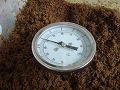
(3) Add water only a little. 加一點水 各人建議加10%的水 即10公升木屑加1公升的水}
(4) Put them into the container, the mixed flakes will start thef
fermentation. 將混合好的材料置於容器中開始發酵E
(5) The temperature will be up to 40 or more degrees for C.4]Uo>
一開始溫度會高於攝氏40度或更高 在這裡糾正一下日本友人的文法:?}K?
這句應該寫成"The temperature will be raised up to 40 centigrade degree or more."*^o^*=;W
©昆蟲論壇 -- 昆蟲論壇 MUi^3E
(6) In the case of Dorcus curvidens, we could rear them in thisb@aYSI
condition (high temperature), but larvae of the Dorcus titanus died.b&]
日大可以在高溫飼養 可是阿扁會掛掉KPVw
So, after finishing the fermentation, you have to put larvae into*E`>
the nutrient rich flakes into separated bottles in each.3 ?i[1
阿扁要分開一隻一隻養)m
(7) The mechanisms of the fermentation in this process is unclear, but I~}UZ
think the natural Yeast will function in the process and it may produceyv`
some kinds of amino acid or some organic materials.3
發酵的機制目前還不是很清楚 但天然的酵母菌會自己進行這些作用 產生一些胺基酸和s.vu
有機物質R-SHmR
There are so many important things for rearing Dorcus titanus, but I can not say only in a word.D>RE
I hope you are success for making flakes and for rearing large DorcusK;s
titanus sika.^9%'-A
他說其實還有一些東西不是用寫的就可以講得很清楚, 希望我能成功地養出DMQ
大的阿扁S
>>>>>>>>>>>>>>>>>>>>>>>>>>>>>>>>>>>>>>>>>>>>>>>>>>>>>>>>>>>>>>>>>>>>>>>
那二話不說 試了20隻阿扁幼
1. 5隻用添加發酵法養L
2. 5隻用再發酵癈菌包00
3. 5隻用添加發酵木屑:無添加發酵木屑=1:1L[E1
4. 5隻用櫟木屑w|
1-3都己化三齡初(7/29一齡蟲到現在)}+8
最大的是用1法 5.5g 好像不是很大...U
2法看起來不錯 也有4.5g...Kj
這樣應該不算大吧 阿扁一二三齡各會有多久啊?AzDZ
4法到目前還在二齡 可能是太乾的關係吧MT0tvR
不過阿扁幼不可以太溼 不太耐溼的蟲:\8({
----------------------------------------------------------------------,taCm5
這個日本人叫Kazuhiro E. Fujimori+B/2qI
是上述日文線上雜誌的編輯之一bjUK4
目前在日本國家實驗室工作t.T
National Institute of Advanced Industrial Science and Technology (AIST)pg#1
Division for Human Life Technologyb.{
Neuronics Research Group?d4S=E
是個PHD搞神經科學的
| |



 頂端
頂端  加到"我的最愛"
 主題管理:
總固頂
主題管理:
總固頂  取消總固頂
取消總固頂 





 短訊息
短訊息 查看
查看 搜尋
搜尋 通訊錄
通訊錄 引用
引用 回覆
回覆 給發文者一個讚
  2002/09/30 04:03:06pm
  IP: 已設定保密