| |
各位好 又來串門子了o)Q4
最近老板不在 家裡沒大人 所以又上來混了^o^%E
前陣子跟一個辦日文線上雜誌的朋友通了幾封maile
 ZL ZL
http://www.mars.dti.ne.jp/~k-sugano/bakamono_web/index2.htmlnd h8i
(這個站很不錯 大家可以去看看 不過都是日文的...)wa.ph
請教他木屑發酵的問題 他很熱心地告訴我了一些配方'U{`]
其實也沒什麼配方啦 只是說阿扁可以試著養養看|JM32\
email原文如下:#M'H
-----------------------------------------------S
Hi Joe,ex/u
©昆蟲論壇 -- 昆蟲論壇 5`9P&m
Sorry, I was so busy because of the preparation for participation to the annual meeting for Japanese neuroscience, and there was no time to|
translate the rearing manual for Dorcus titanus ssp. in Japanese tof34
English, completely.EI)re
....上面是些寒暄的話可以不管他H?{:[S
In my opinion, D.t. sika in Taiwan is the same species D.t.pilifer in9L*H]
Japan.~`j4?
So, the following method will be useful for rearing large one.YheF
他認為台灣的阿扁跟日本的D. titanus pilifer是近緣 所以下列是養出大型vdz
日本阿扁的作法 提供參考X
©昆蟲論壇 -- 昆蟲論壇 2
If you can understand Japanese language a little, please refer the pagebq7ma
http://www.asahi-net.or.jp/~dh7k-sgn/BAKA-9810/kyoi.htmDpK}t
^^^^^^^^^^^^^^^^^^^^^^^^^^^^^^^^^^^^^^^^^^^^^^^^^^^^^^^JUZ]
此篇參考文獻很不錯 如果你看得懂一些日文的話可以上去看看c~vP
如果有哪位大大可以翻譯 那是再好也不過了BpOZ
©昆蟲論壇 -- 昆蟲論壇 t
This page documented the procedure for the nutrient-rich flakes.7"lj?
You have to prepare the following items:S^<dJ
(1) the flakes(木屑) which is from some kind of broad leaf trees, for example Quercus (Japanese "Kunugi")(中文指"櫟木")eB,yk
We can obtained from the raw and dead woods, and flakes from farmer or$YA}
some insect shops. The quality is the key for success, but I can notM
express the words.生木屑和朽木屑可以去買 不過其品質是成功的關鍵:q*+)
We blended 30% (vol) of flakes from row woods and 70% (vol) dead woodsbP|F
before the further fermentation. 用30%(體積百分比)的生櫟木屑和70%的朽櫟木屑f
混合用以接下來要進行的發酵作用\`%
(2) Mix together 0.35 volume of Wheat germ and 0.5 volume of Wheat with 10 volume of flakes. 把3.5%的小麥胚芽和5%的小麥粉加入調好的木屑中混和!
(3) Add water only a little. 加一點水 各人建議加10%的水 即10公升木屑加1公升的水g_
(4) Put them into the container, the mixed flakes will start thet,!J*
fermentation. 將混合好的材料置於容器中開始發酵Gh?
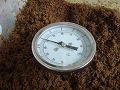
(5) The temperature will be up to 40 or more degrees for C.GF'.z#
一開始溫度會高於攝氏40度或更高 在這裡糾正一下日本友人的文法:sF=!
這句應該寫成"The temperature will be raised up to 40 centigrade degree or more."*^o^*8=
©昆蟲論壇 -- 昆蟲論壇 xe!-.?
(6) In the case of Dorcus curvidens, we could rear them in this,@a "
condition (high temperature), but larvae of the Dorcus titanus died.Wy{B
日大可以在高溫飼養 可是阿扁會掛掉8+
So, after finishing the fermentation, you have to put larvae intoseX||0
the nutrient rich flakes into separated bottles in each.i@D
阿扁要分開一隻一隻養Ewo+q
(7) The mechanisms of the fermentation in this process is unclear, but IBoz6?
think the natural Yeast will function in the process and it may producek
some kinds of amino acid or some organic materials.&M7
發酵的機制目前還不是很清楚 但天然的酵母菌會自己進行這些作用 產生一些胺基酸和;"
有機物質ZLo{>
There are so many important things for rearing Dorcus titanus, but I can not say only in a word.tf2
I hope you are success for making flakes and for rearing large DorcusBxv
titanus sika.e[s
他說其實還有一些東西不是用寫的就可以講得很清楚, 希望我能成功地養出)
大的阿扁j
>>>>>>>>>>>>>>>>>>>>>>>>>>>>>>>>>>>>>>>>>>>>>>>>>>>>>>>>>>>>>>>>>>>>>>>
那二話不說 試了20隻阿扁幼
1. 5隻用添加發酵法養"
2. 5隻用再發酵癈菌包R"xG
3. 5隻用添加發酵木屑:無添加發酵木屑=1:13i
4. 5隻用櫟木屑!T*z(4
1-3都己化三齡初(7/29一齡蟲到現在)XawSZ
最大的是用1法 5.5g 好像不是很大...z~\
2法看起來不錯 也有4.5g...ek<p*
這樣應該不算大吧 阿扁一二三齡各會有多久啊?@"R&m
4法到目前還在二齡 可能是太乾的關係吧4:
不過阿扁幼不可以太溼 不太耐溼的蟲]='O
----------------------------------------------------------------------'
這個日本人叫Kazuhiro E. FujimoriV
是上述日文線上雜誌的編輯之一1%
目前在日本國家實驗室工作Z{_
National Institute of Advanced Industrial Science and Technology (AIST)D
Division for Human Life Technologyi3
Neuronics Research Group|-v9
是個PHD搞神經科學的p)
| |



 頂端
頂端  加到"我的最愛"
 主題管理:
總固頂
主題管理:
總固頂  取消總固頂
取消總固頂 





 短訊息
短訊息 查看
查看 搜尋
搜尋 通訊錄
通訊錄 引用
引用 回覆
回覆 給發文者一個讚
  2002/09/30 04:03:06pm
  IP: 已設定保密